
Distressed Millennial
Step by step, I will get through!

The other day I was having a discussion with one of my friends who happens to be a Clinical Psychologist (Lucky me!). I shared with her an Instagram post on “High-Functioning Anxiety” and told her that it resonates with what I am going through these days. We had a lengthy discussion on it, kind of heart-to-heart and I felt that it should be the topic of my next issue.
I am sharing a few chunks of our conversation which now that I read feels more like an interview. Never mind, though- it’s important. I believe that the word of a mental health professional against mine will hold more value if I have to talk about depression, anxiety, and existential crises in millennials- though we had limited our discussion to high-functioning anxiety, as mental health is a massive concept and to discuss on its various aspects I will need to write hundreds of newsletters (ain’t going to do that for the sake of my own mental health). ;)
So, here it goes:
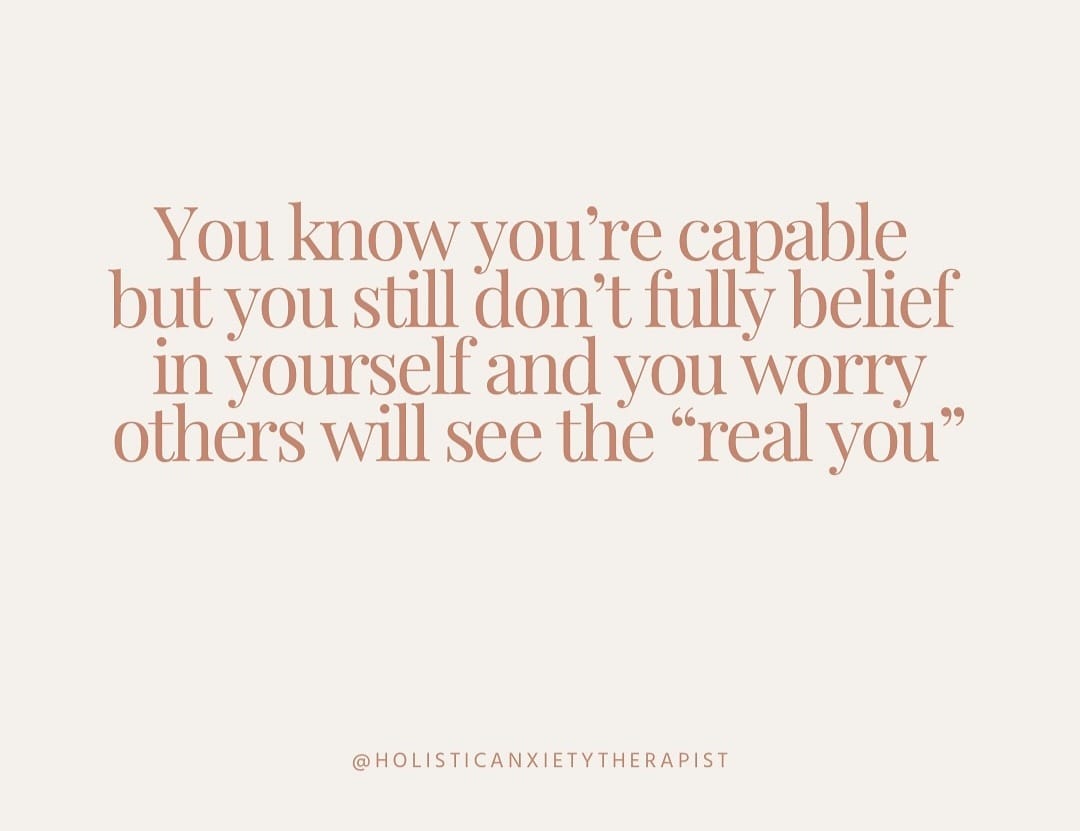
Kiran: You know what I feel like we millennials are juggling so many things at once, and deep down we are very stressed and overwhelmed. It’s like a continuous pressure to achieve something- somehow as if we are not doing enough, there is a constant wariness about the future, even when everything seems fine.
Umbreen: You're absolutely not alone in feeling this way. Many millennials express a similar sentiment, and it's worth acknowledging just how much societal, economic, and cultural shifts have impacted our generation. The sense of juggling too much often stems from the high expectations placed on individuals to excel in multiple areas—career, relationships, personal growth—often with little room for rest or self-compassion. That too in a world that’s not “fine” by any standard. We are being asked to thrive in an environment where bare survival is becoming a challenge with each passing day (global instability, climate crisis, economic woes, just to name a few). We have gaslit to a point where we no longer acknowledge these ever-present stressors at a cognitive level and shame our bodies for reacting to them. Another reason for this pervasive stress is the constant comparison facilitated by social media and the pressure to "always be on" in a world that glorifies hustle culture. That, alongside financial insecurities, the pace of technological change, and uncertainty about the future, and it’s no surprise that a baseline of stress has become the norm for many. So, even when things seem fine outwardly, that feeling of “not enough” can persist because it’s often more about our internal expectations than external realities. It begets the question “What does “enough’ look like for you? Are you measuring yourself by values that resonate with you or those imposed by external pressures?”
K: I have observed that it’s hard for millennials to relax or take a break without feeling guilty about it, why is that so?
U: Many millennials find it hard to relax or take a break without guilt due to a combination of internalised societal pressures and external challenges. Growing up in a culture that glorifies hustle and equates productivity with self-worth, they often feel that rest must be "Earned”, leading to a constant sense of inadequacy (Thank you for that Boomers and Gen-X). The pervasive influence of social media exacerbates this by creating a culture of comparison, where others’ curated successes make downtime feel like falling behind. Previous generations often adhered to a strict "Work hard, retire later" mindset, but millennials are navigating a world where traditional career trajectories are less predictable. The pressure to constantly "prove" one’s worth as a worker or entrepreneur has intensified the reluctance to slow down. So, resting can feel like a missed opportunity to work or advance. Additionally, constant connectivity through technology blurs the boundaries between work and personal life, making it difficult to truly switch off. Underlying all this is the conditioning that ties achievement to self-worth, making rest feel less like a necessity and more like a risky indulgence. There’s no room for rest and relaxation in a nervous system that’s operating in a survival mode. Overcoming this requires a conscious effort to reframe rest as productive and essential, while challenging the narratives that prioritize doing over being.
K: Have you noticed how many of us are always trying to "keep it together" on the outside, but feel like we're falling apart inside?
U: Absolutely! Millennials and imposter syndrome – a love-story as old as the generation itself. We grew up in a society that taught us to prioritize appearances over owning our internal struggles. Many people fear being judged or perceived as weak or “not good enough” if they show vulnerability, so they suppress their true feelings and put on a brave face. There's also a constant pressure to meet expectations—whether from work, family, or social circles—that makes admitting struggles feel risky or shameful. On the inside, however, those emotions don’t disappear. Suppressing them often leads to feelings of isolation, overwhelm, or even burnout, because maintaining that "together" exterior takes a lot of energy. It’s like carrying a heavy emotional load but never being able to set it down. The result is a gap between how we present ourselves and how we actually feel, which can make the inner turmoil even harder to address.
K: Why is it difficult for us millennials to ask for help and feel like they should be able to handle everything themselves?
U: Millennials grew up during a time when self-reliance and independence were heavily emphasized, often accompanied by the belief that success is tied to personal effort alone, creating unrealistic expectations. Additionally, the rise of social media has amplified a culture of comparison, where curated images of others’ lives make it seem like everyone else is managing perfectly, leaving little room to admit struggles. There’s also the fear of judgment or rejection—asking for help can feel like exposing a vulnerability that others might not understand, accept or even use it against us.
K: Why is there a constant comparison of their life to others?
U: We can thank the air-brushed and highly unforgiving world of social media for that. Platforms like Instagram and LinkedIn amplify visibility into others' achievements, relationships, or lifestyles. Since these posts rarely show struggles or failures, it becomes easy to feel inadequate or like you're falling behind, even if you're doing well by realistic standards. Furthermore, it does not help that the more you engage with such content, the more algorithm pushes it, creating an endless loop of comparison. Additionally, this generation also grew up in a highly competitive environment, with societal pressures to achieve success quickly and visibly. Economic instability and fewer opportunities for traditional milestones, like homeownership or stable careers, heighten the anxiety about "keeping up." Humans naturally compare themselves to others as a way to gauge progress or self-worth, but for millennials, this instinct is intensified by constant exposure to comparison triggers.
K: It feels like we are too "in our head" to truly enjoy the present moment.
U: The feeling of being “too in our head” to fully enjoy the present moment is a common experience in today’s hyper-connected world. A survival-focused nervous system is too anxious and future-focused to allow for “presence”. The constant stimulation of notifications, social media, and multitasking keeps our minds in a state of perpetual activity, making it harder to ground ourselves in the present. Additionally, the cultural emphasis on productivity and achievement can create guilt or discomfort about simply "being" rather than "doing”. Human beings were never meant to sit inside all day, glued to a screen that offers more triggering information in one second than we can process in a day.
K: Why does anxiety sometimes show up even when you’re outwardly calm and functioning?
U: “The body keeps score” -- Many people with anxiety are skilled at masking their internal struggles, especially if they’ve learned to push through discomfort in order to meet external expectations (Hello Millenials!). This creates a disconnect between their internal experience and external behavior. Over time, this dissonance can become emotionally exhausting. We must understand that suppressing the inner experience does not make it go away. The body knows and it will find ways to communicate no matter what we do to suppress it.

K: Why do millennials feel it's hard for them to set boundaries and say No to things they’re not comfortable with?
U: Many millennials grew up in households where there was constant pressure to please others, to gain approval or avoid disappointing people. Growing up in a highly competitive environment, millennials have been taught to be accommodating, to work hard, and to "do it all" in both personal and professional settings. There’s also a cultural emphasis on being busy and productive, which can create guilt around prioritizing oneself or turning down requests, even if it’s for self-care. To a mind stuck in survival mode, people-pleasing signals safety (while it makes us more vulnerable to exploitation in long-term). Setting boundaries requires self-awareness, self-worth, and the confidence to uphold one’s limits, which can take time and emotional energy to develop (something most millennials were neither offered not encouraged to create for ourselves). So, saying no might feel like the biggest betrayal.
K: Why do millennials feel disconnected from the world and struggle to make sense of their place in it?
U: Millennials have lived through profound technological advances, economic shifts, significant social changes and unprecedented global events, which can lead to feelings of instability and uncertainty. The world has transformed rapidly in ways that can make it difficult to establish a clear sense of identity or direction. Additionally, millennials are often burdened by the weight of unrealistic expectations—both self-imposed and societal. This is compounded by an overall sense of global uncertainty, from climate change concerns to political instability, which can amplify existential anxiety and feelings of powerlessness. On a deeper level, millennials may be grappling with an evolving sense of purpose. Many are questioning traditional societal values around success and achievement and seeking meaning beyond materialism, while being constantly bombarded by information that recommends otherwise. This search for authenticity and purpose can feel isolating if it seems like others are following more conventional paths. Let’s also remember that most millennials are now in their 30s and 40s – a time that’s developmental also focused on quest for deeper and self-guided purpose. Connecting within can often be accompanied by withdrawing externally, if only momentarily.
K: Why do millennials feel like they're always on the go, but still feel like they're not doing enough?
U: One key factor is the pervasive hustle culture, which often equates constant activity with success. From a young age, millennials were exposed to messages that glorified overexerting, as a necessity for survival leading to a perpetual sense of urgency, where taking a break or slowing down feels like wasted time. Also, the goal-post of external standards is ever-moving, so you never reach a point of fulfillment. No matter what you do, it will never be enough! There will always be someone doing more and social media will ensure that you know it too.
K: My questions may sound repetitive but I need to understand why do millennials feel like there’s always something they need to do, even when they don’t know what the next step is and this continuous grind of survival will not end.
U: At its core, this reflects a disconnect between internal desires for meaning, stability, and fulfillment, and the external pressures to keep hustling without a clear destination. The feeling that there's always something to do, even when the next step isn’t clear, stems from a mix of societal conditioning, internal pressure, and existential uncertainty. Millennials have grown up in a world that values constant achievement and progress, often equating self-worth with productivity. This has created an ingrained mindset that there’s always something to work on—whether it’s career, finances, or personal goals—even if there isn’t a clear next step. This leads to anxiety and eventual burnout, as the fear of stagnation or failure can make it difficult to pause or relax. Millennials often feel like they have to keep pushing forward to secure their future, even when the path isn’t clear. Without clear milestones or guarantees, it’s easy to feel like the grind will never end.
K: Lastly, do you think there is hope for millennials, and how do we move forward?
U: Yes, there is definitely hope for millennials. While they face a unique set of external challenges and internal struggles, there are powerful ways to create a shift toward a healthier, more fulfilling future. Moving forward requires breaking free from the cycle of hustle culture, constant comparison, and perfectionism that often defines this generation’s experience. This would look like redefining success on their own terms, separate from societal expectations or what’s portrayed on social media. This means embracing the idea that success is not just about productivity, but about balance, personal growth, and well-being. Taking time to reflect on what truly matters—whether it’s meaningful work, relationships, or personal fulfillment—can help create a sense of direction and purpose, even amidst uncertainty.
Moreover, millennials need to prioritize self-compassion. Vulnerability doesn’t mean weakness—it’s a sign of courage and self-awareness. It’s crucial to recognize that it’s okay to take breaks, to not have everything figured out, and to seek help when needed. Setting boundaries, practicing mindfulness, and being kinder to oneself can help reduce the constant pressure to be “on” all the time. Therapy and support groups are valuable resources for those who feel overwhelmed or disconnected. Shifting from a mindset of survival to one of growth and self-awareness can make all the difference in creating a more empowered, meaningful life.
Additionally, building community and creating meaningful connections is another way to counter the feeling of disconnection. Millennials can find solidarity with others facing similar challenges, and engage in conversations that foster authenticity and vulnerability. This reduces the sense of isolation and helps to rebuild a sense of belonging and shared purpose.
In conclusion, there’s hope because millennials have the potential to redefine their paths, embrace rest as necessary, build supportive communities, and create space for both personal and collective growth. The challenges may not disappear overnight, but with intentional practices and support, they can be navigated in a way that fosters a sense of fulfillment, resilience, and peace. And always remember --- “You are inherently worthy, not because of what you achieve or prove, but simply because you exist. Trust in your unique journey—who you are right now is enough, and always has been!”
If you like my work, tap the <3 at the end of this article and do not forget to share and bring in more subscribers.
*Umbreen Akhtar is a practising clinical psychologist and can be contacted at umbreenakhtar8@gmail.com
*Picture 1 credits: @holisticanxietytherapist